Dawn Reflection Artists
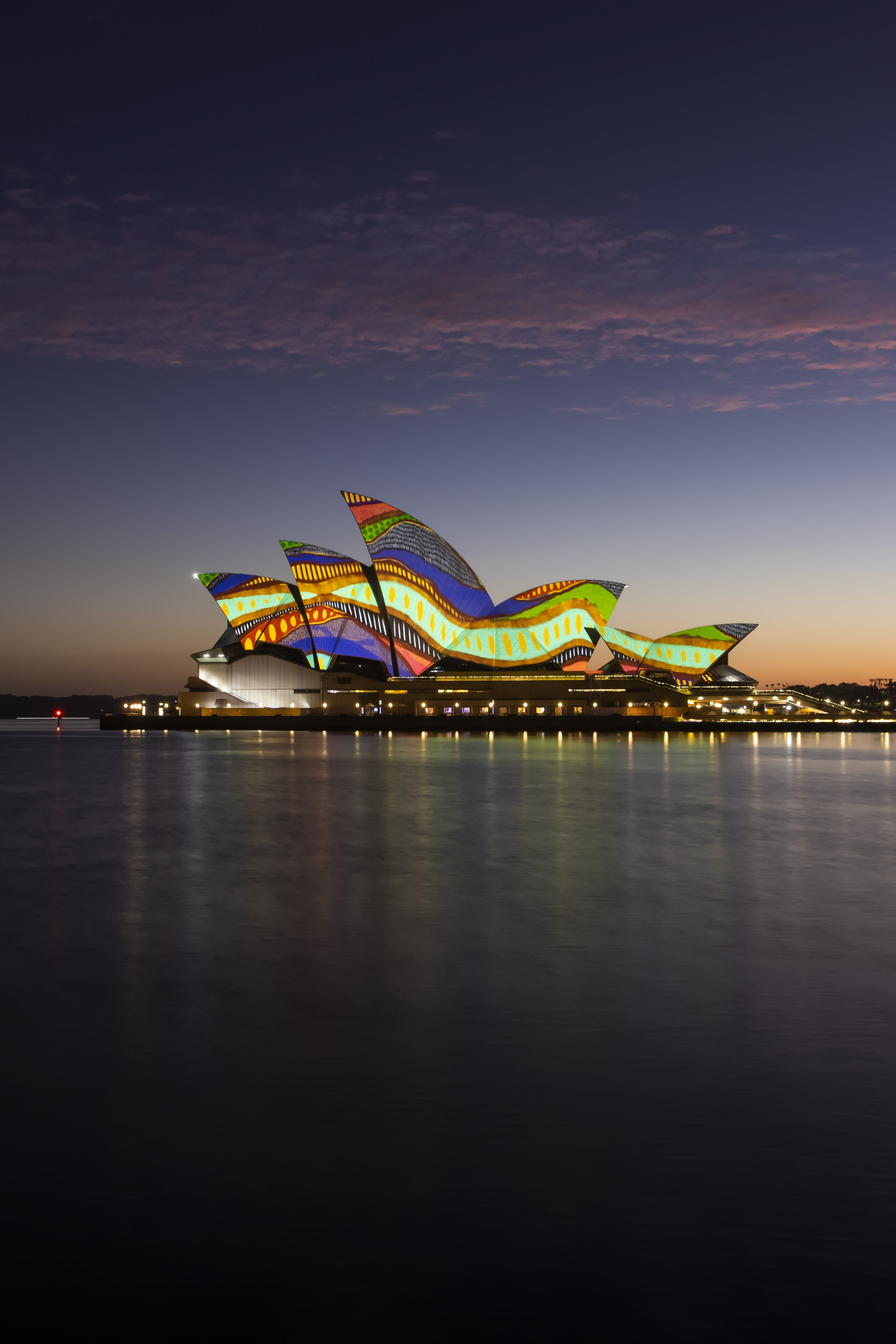
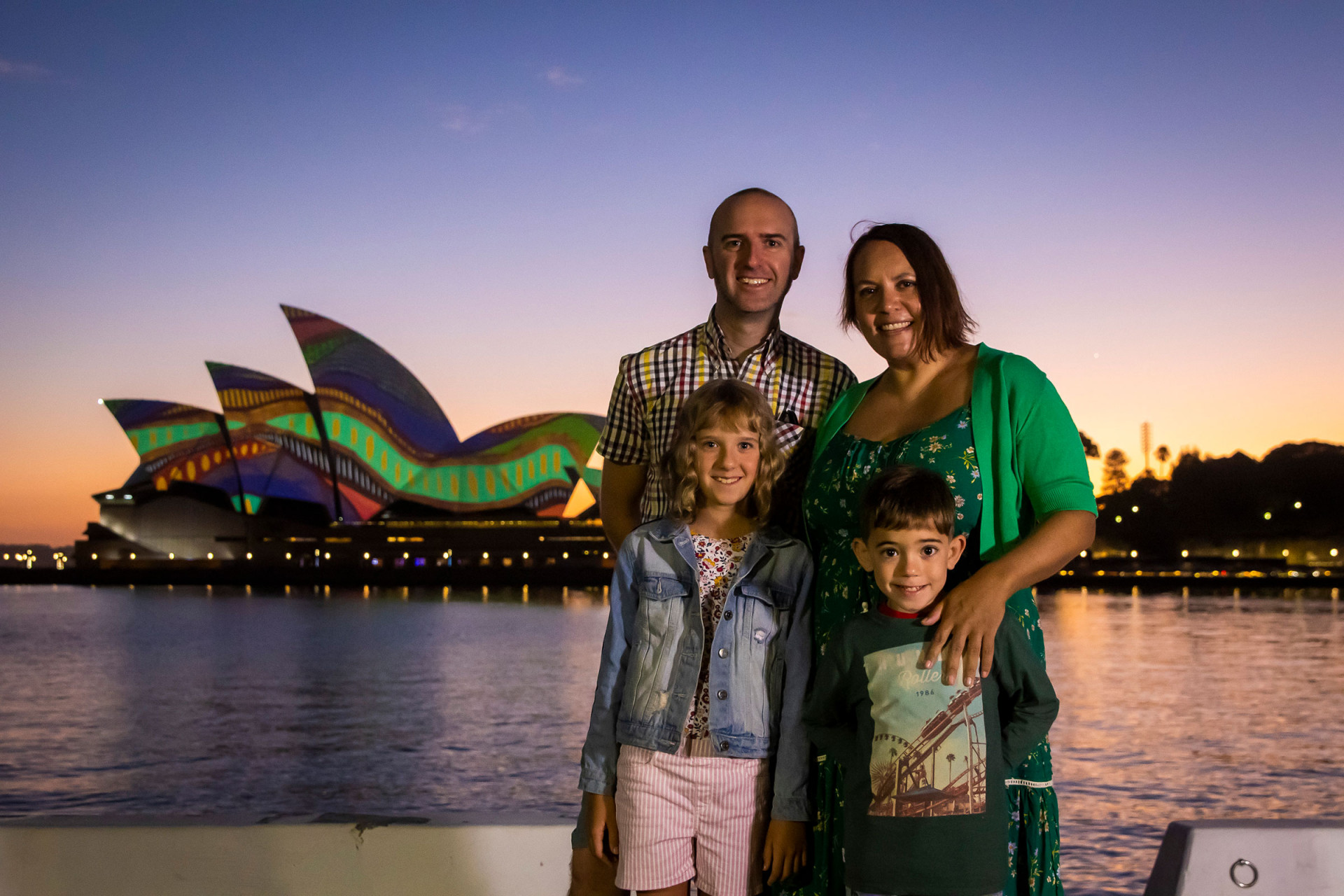
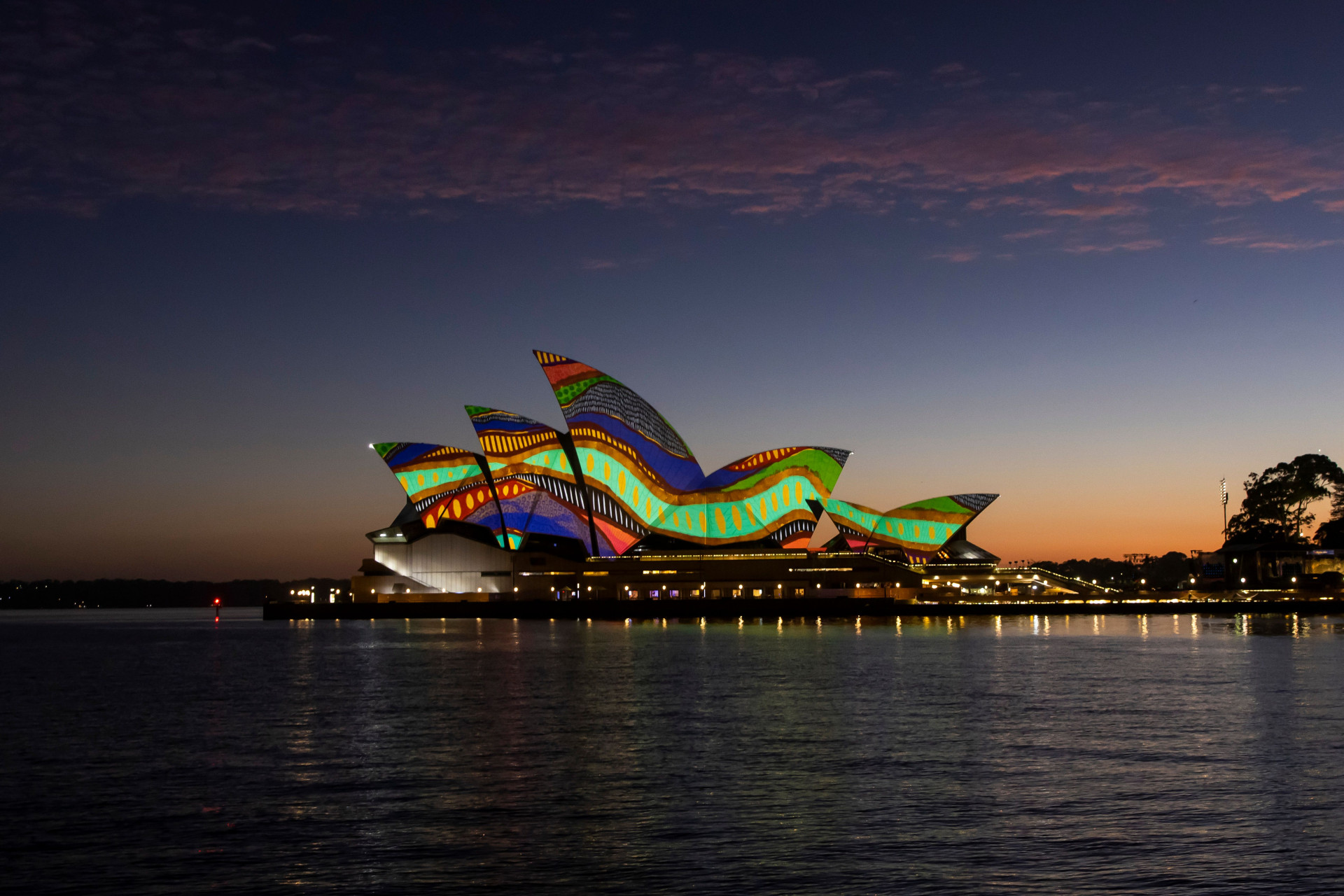
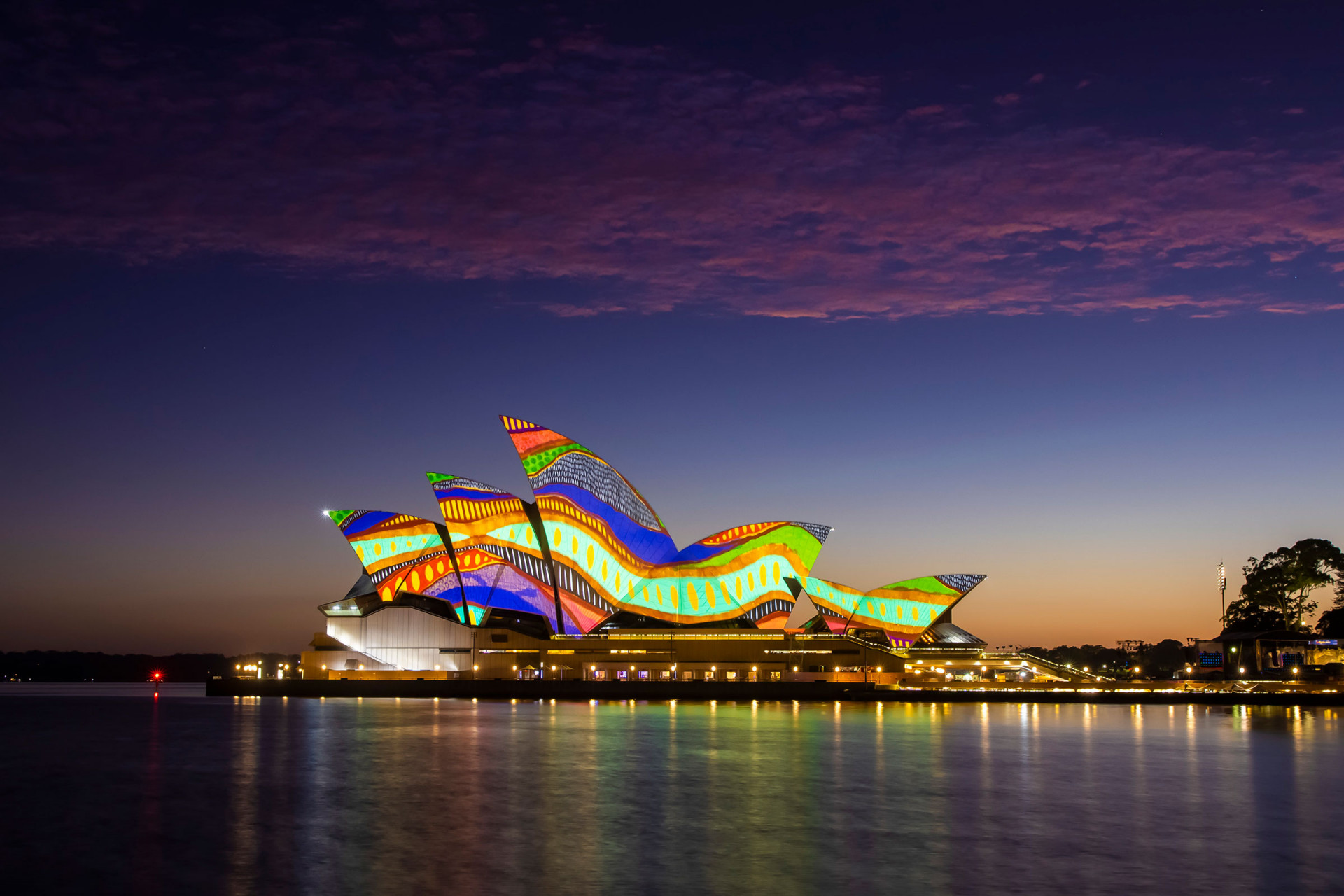
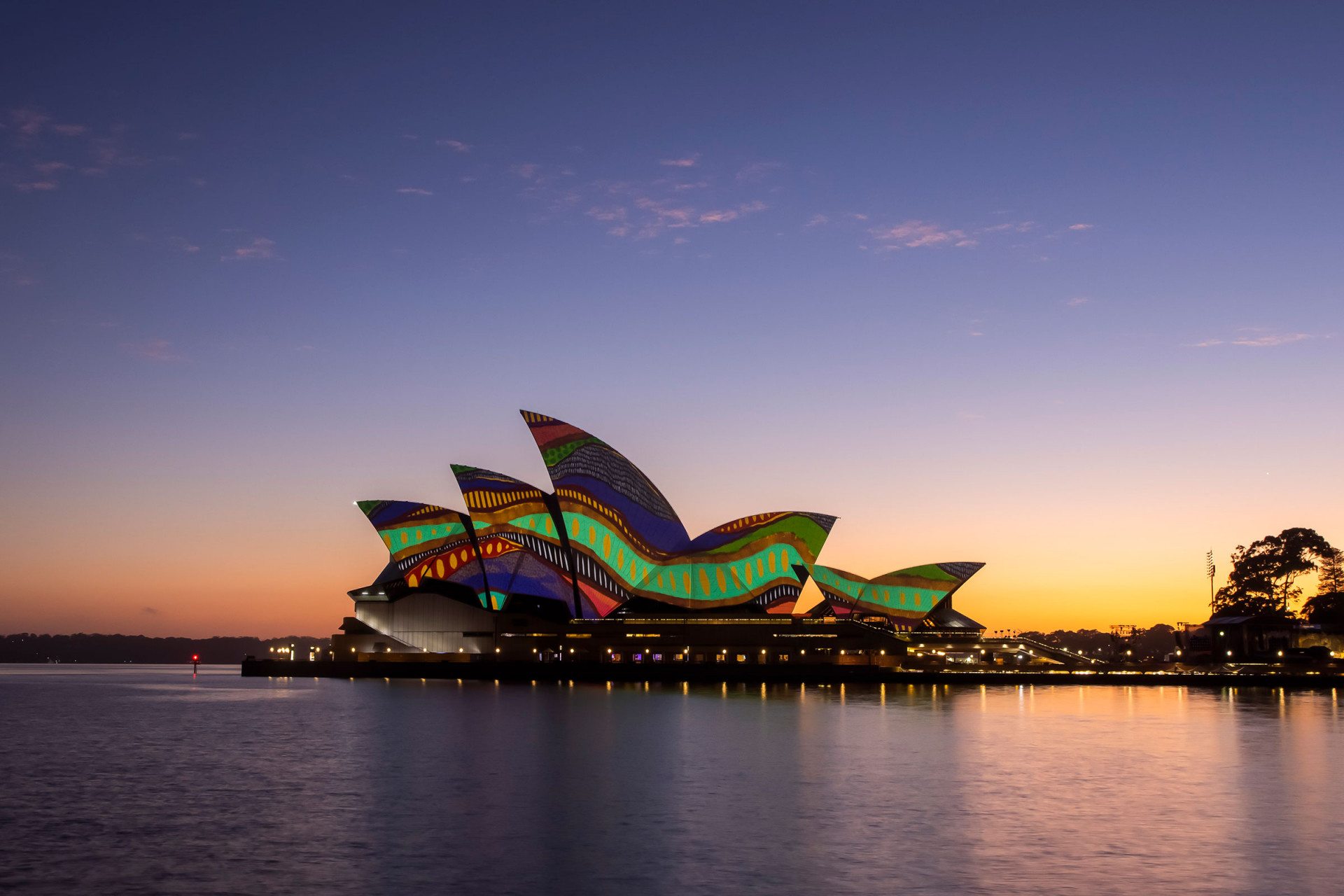
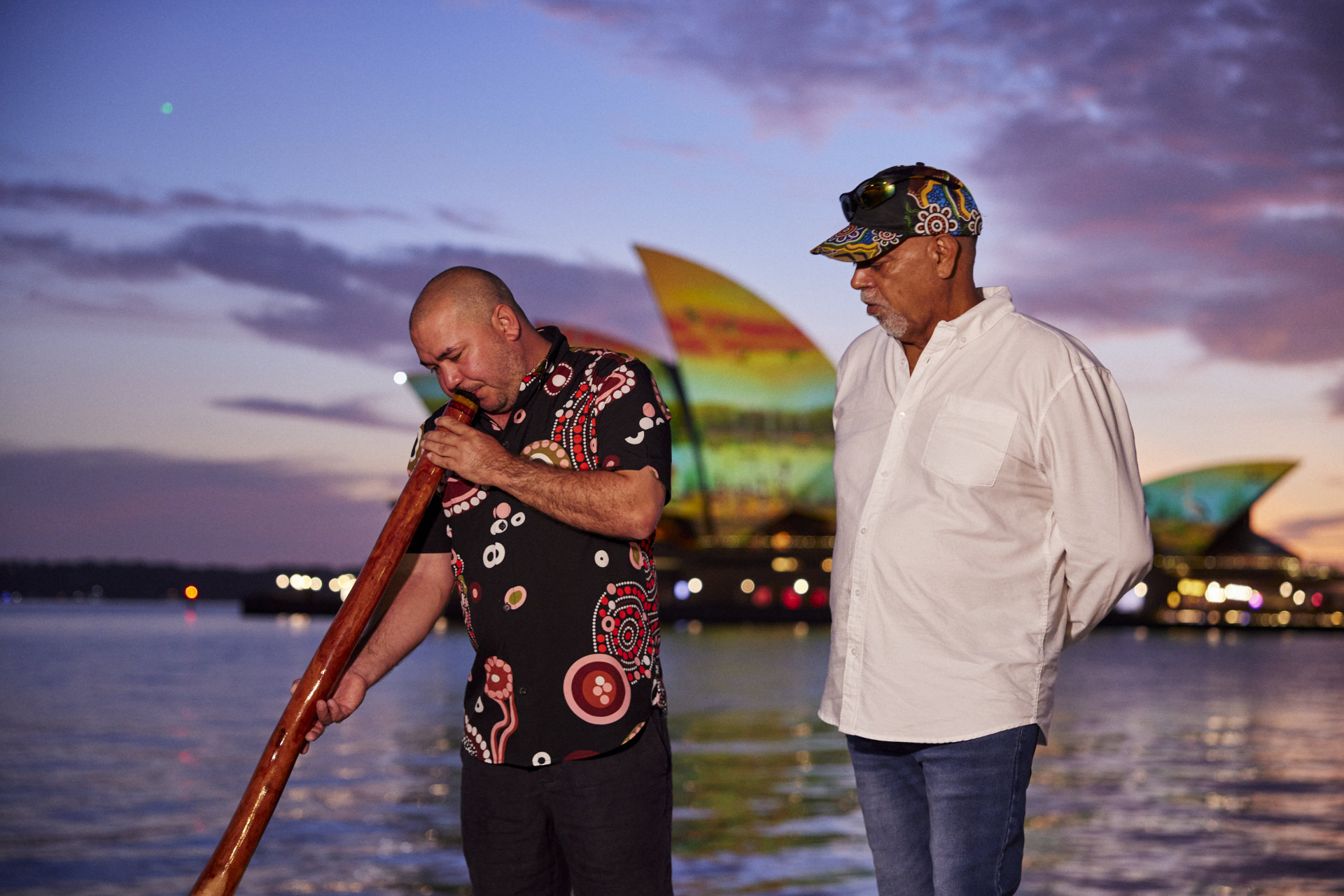
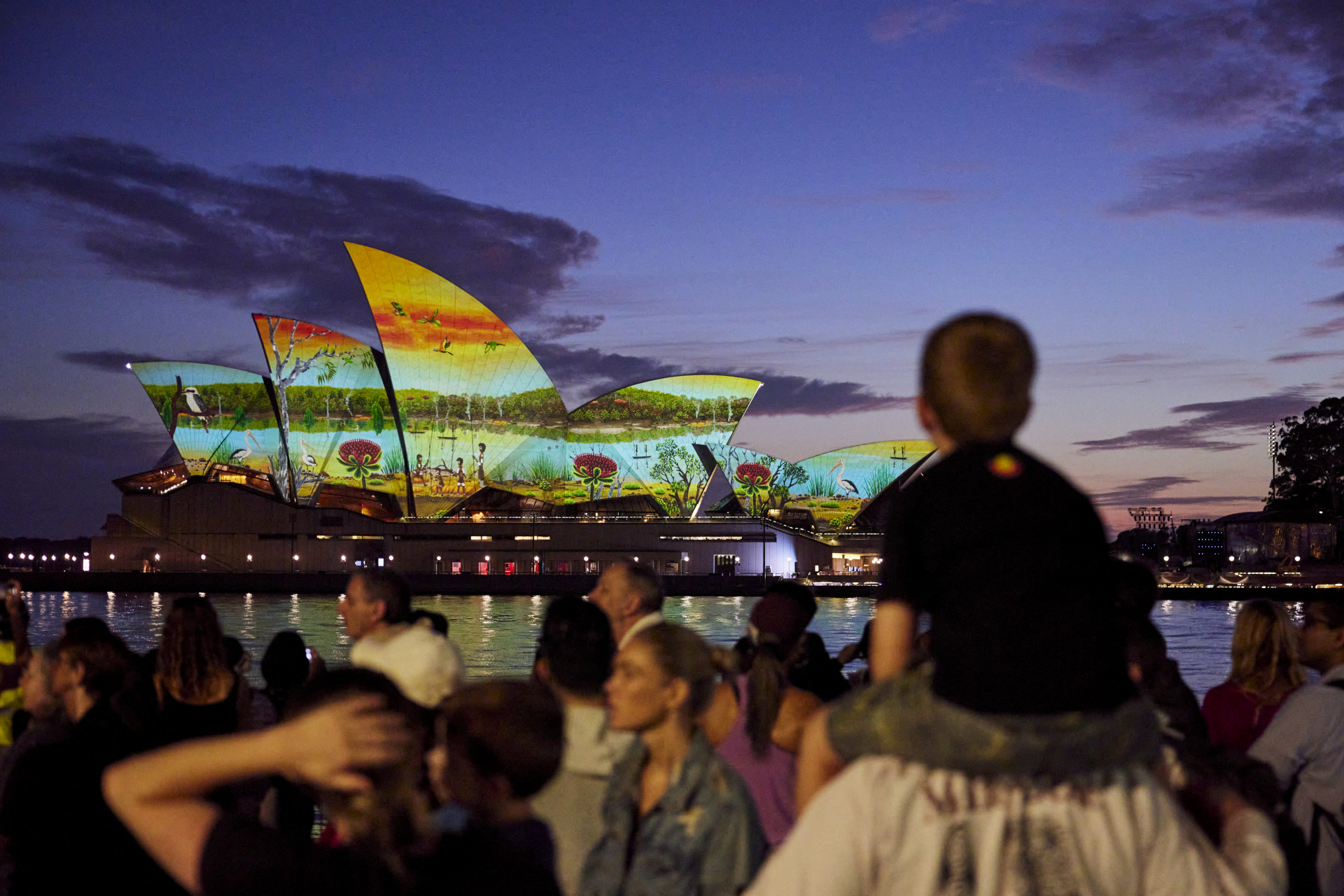
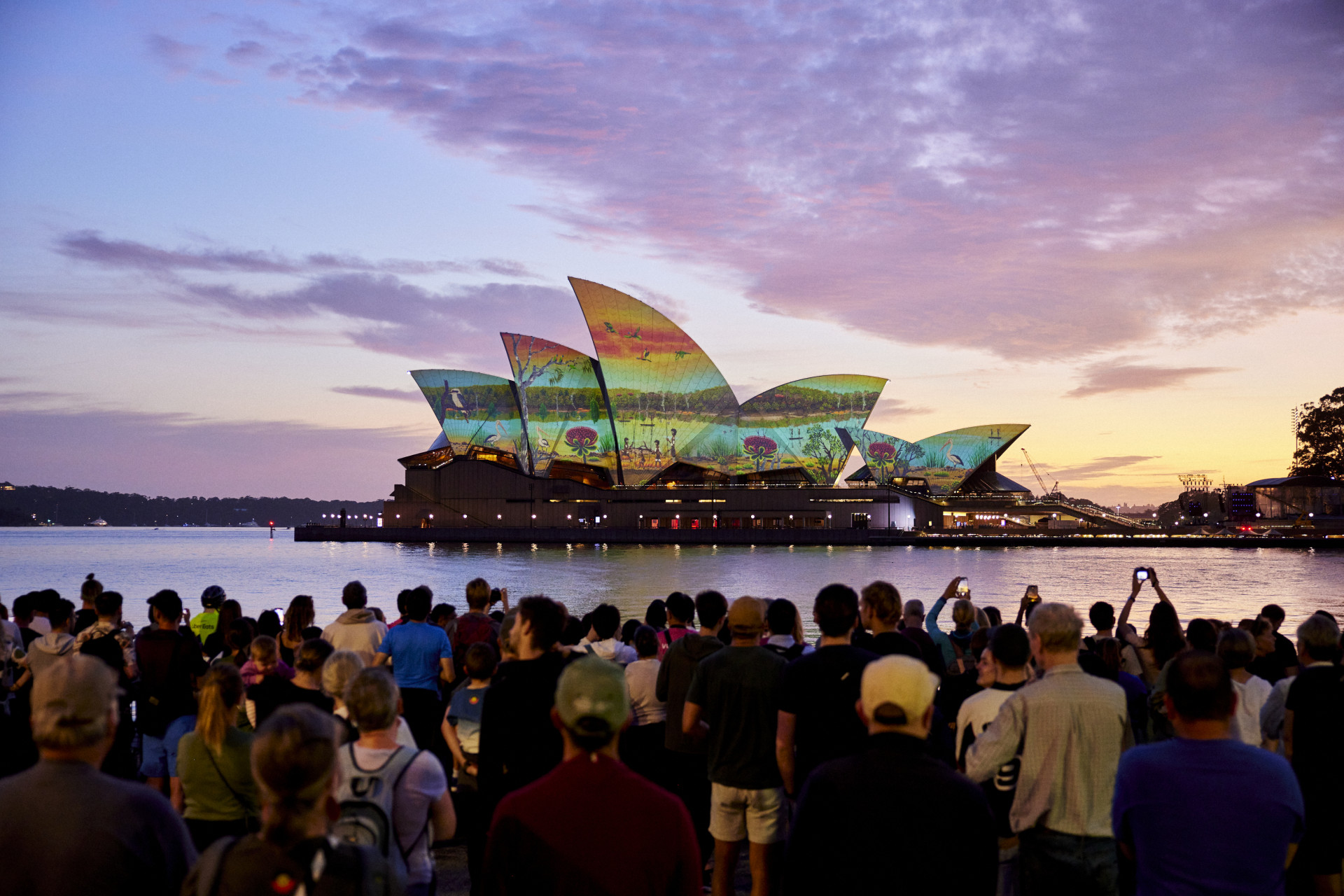
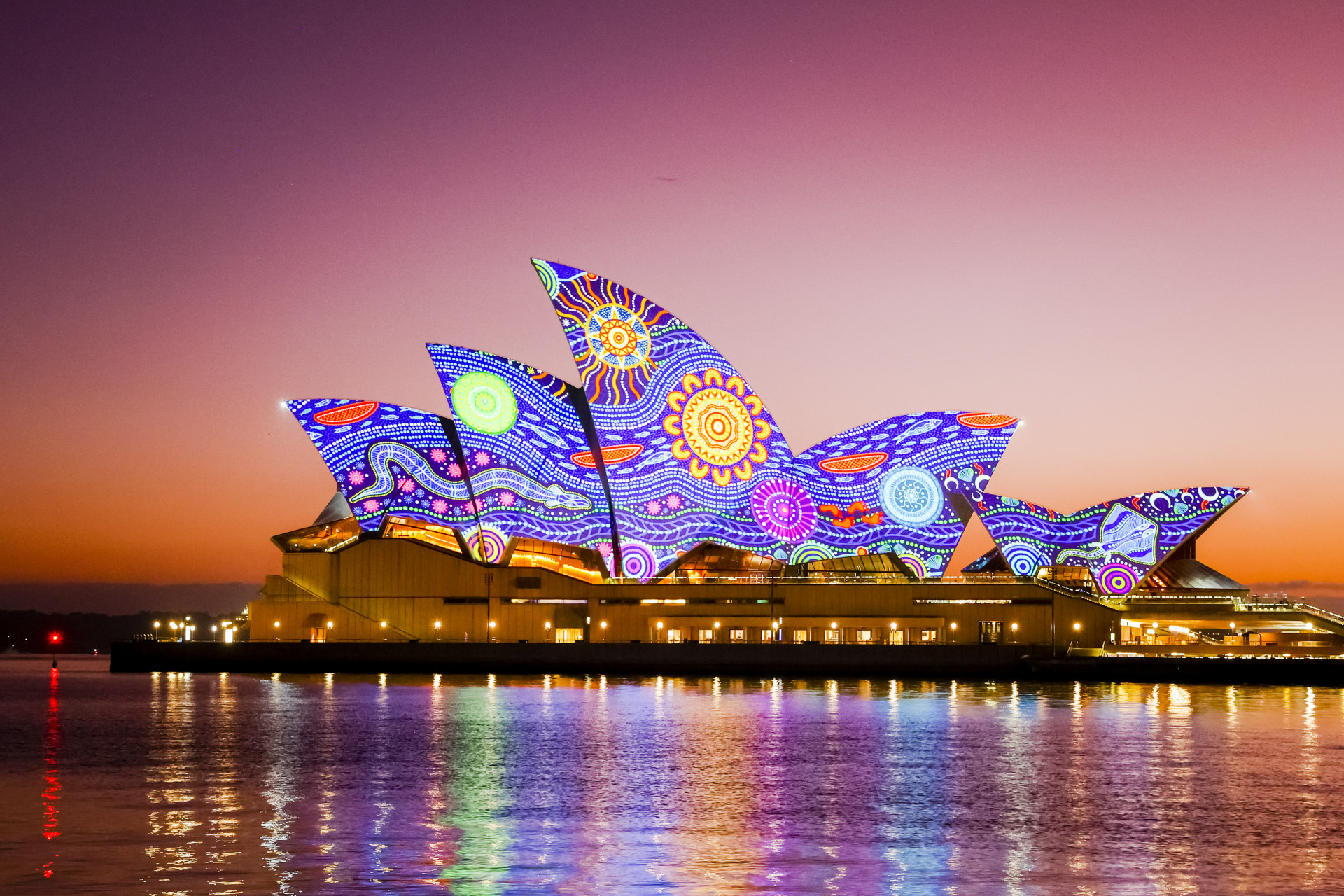
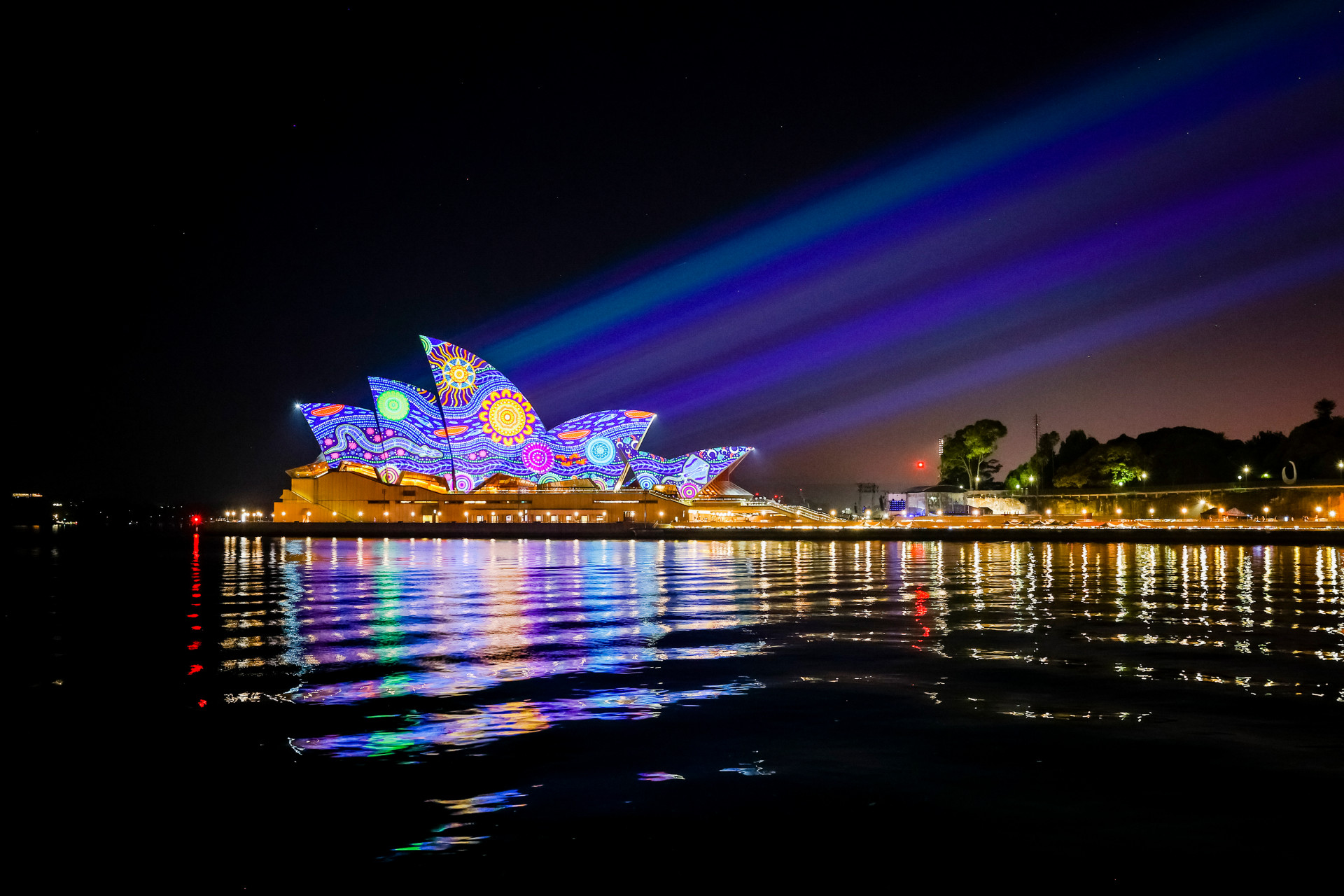
2025: 'River Life' by James P Simon
River Life by James P Simon
About the artist: James P. Simon belongs to the Wiradjuri – Biripi people. James was born in Wellington, near Dubbo NSW and grew up around Newtown and Redfern in Sydney, where he has seen many changes over the last fifty years. James has painted all his life. In 1987 he was awarded a grant from the Aboriginal Arts Council to support his art. Although he completed a six-month art course, James is largely a self-taught artist who has continued to develop his own distinctive style and who now paints mostly in oils. His favourite artists are Picasso, Tom Roberts, Salvador Dali and Albert Namatjira.
About River Life: For Aboriginal people, fishing anywhere on Country, whether it is on the ocean beaches or coastal estuaries or inland rivers and lakes it has always been about more than simply collecting food. We have this connection to water, with spirit, culture, songlines, our dreaming. Waterways also form tribal boundaries. Waterways are critical to the culture and wellbeing of Aboriginal communities. Water provides food, medicine, tools, kinship, connection, recreation, stories, songlines and healing. It can be deeply spiritual, a chance for people to connect with their ancestors.

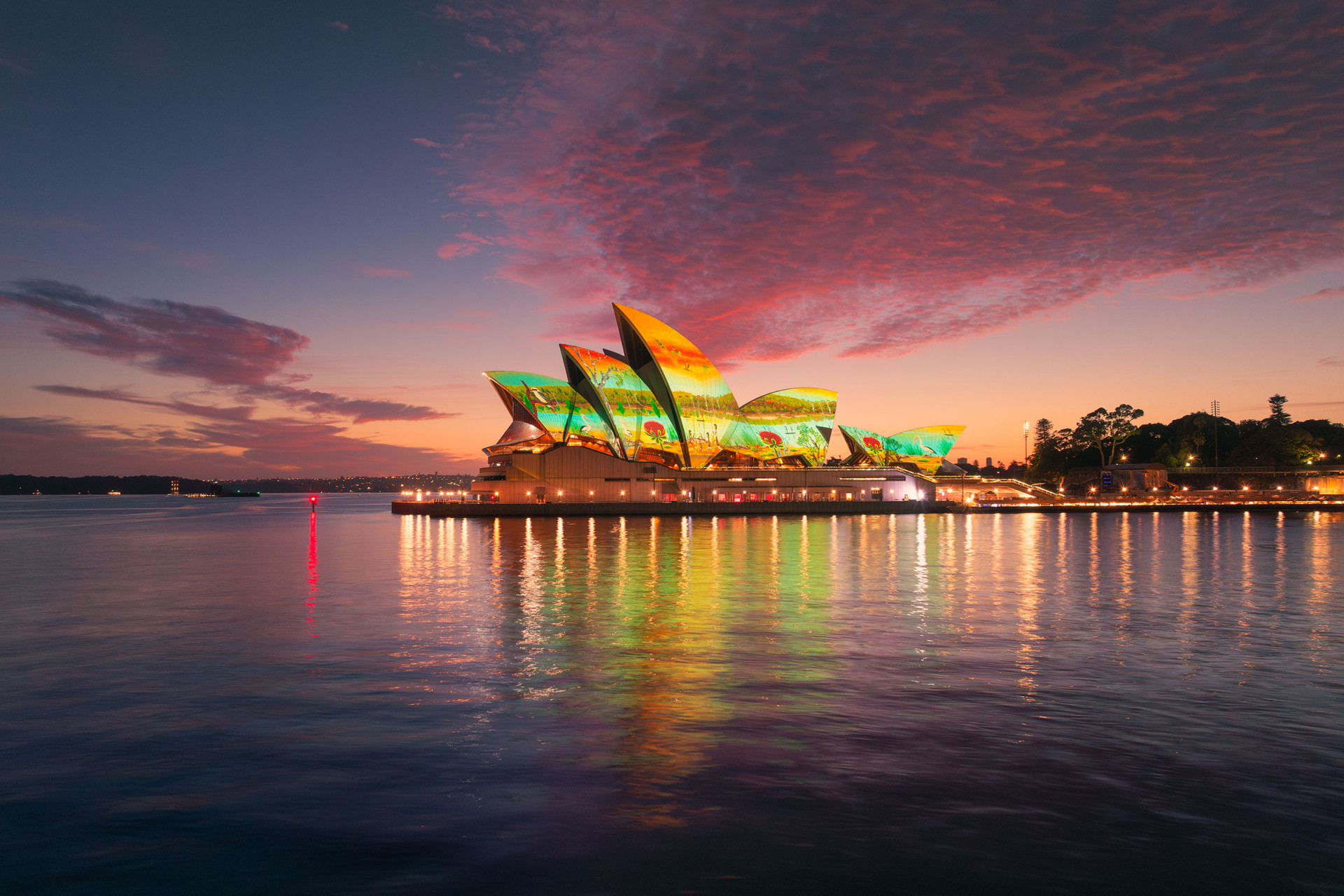
2024: 'Trailblazers' by Brett Leavy
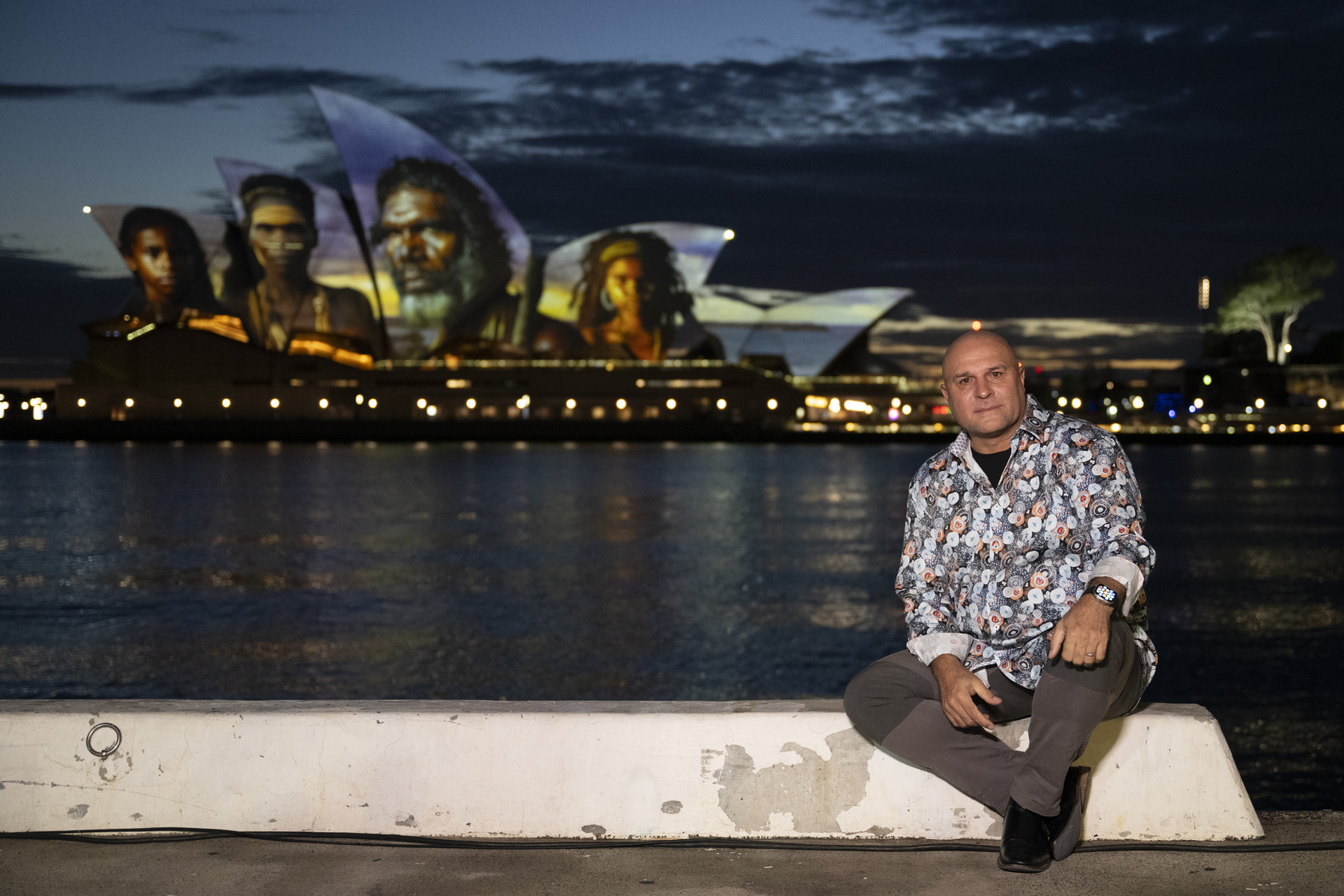
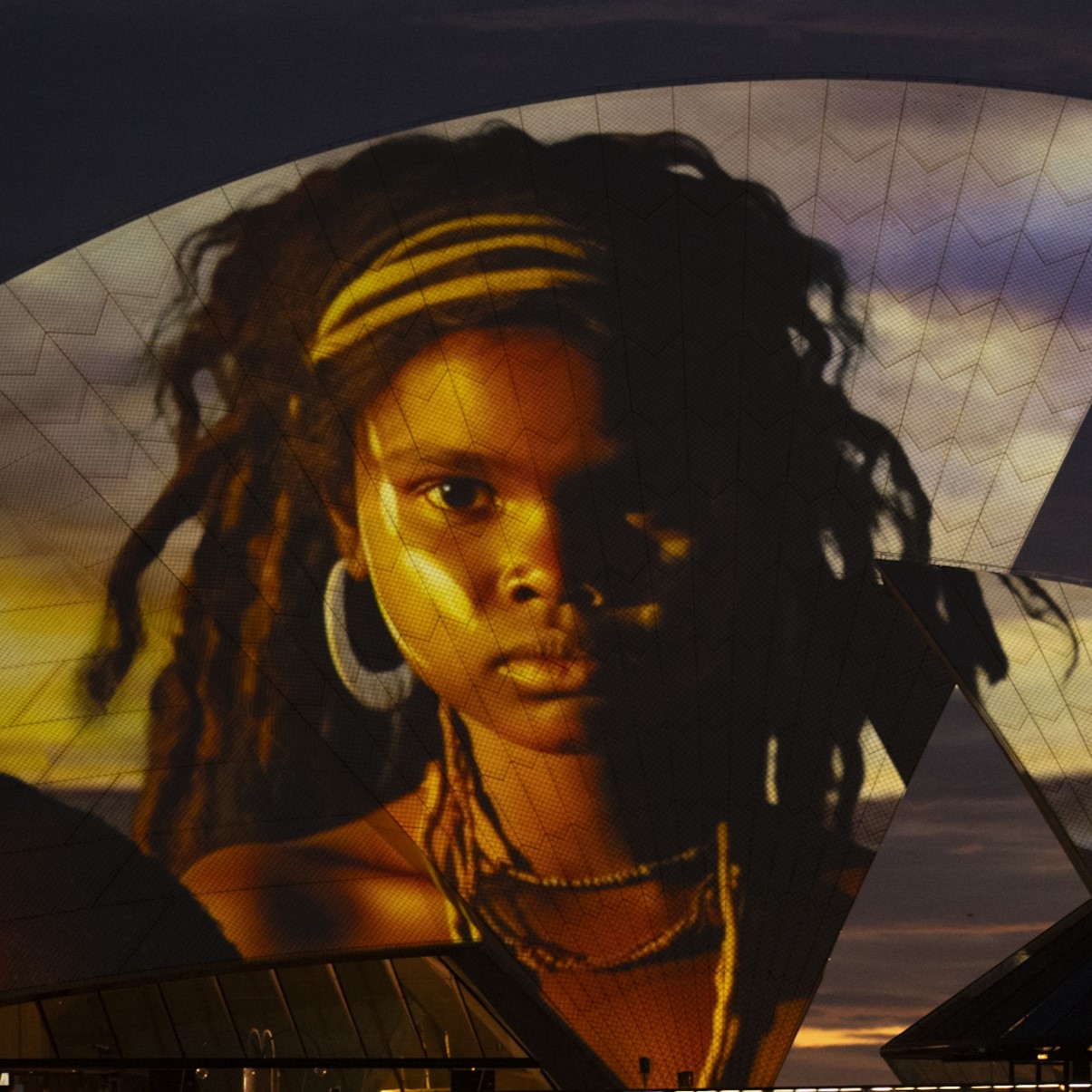
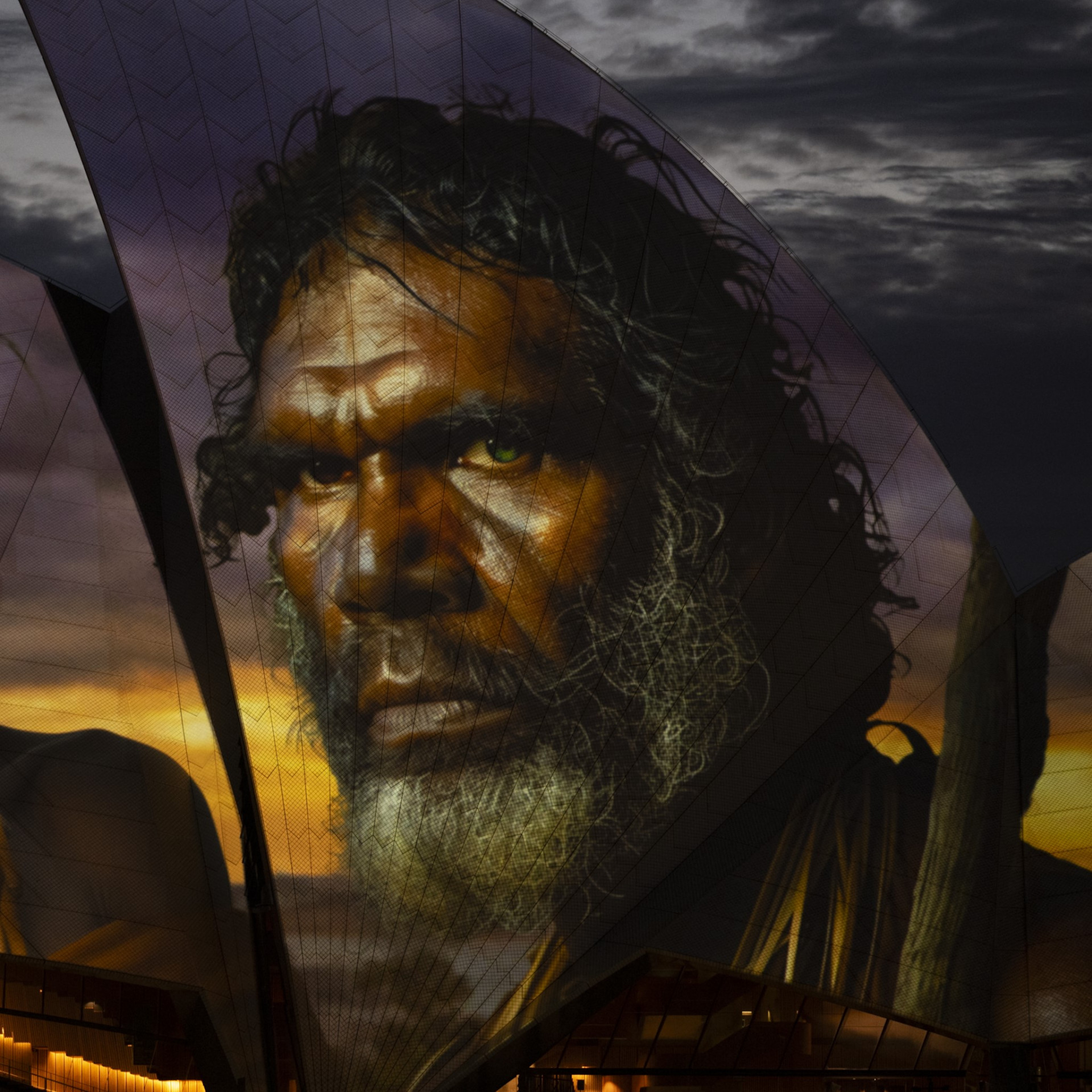
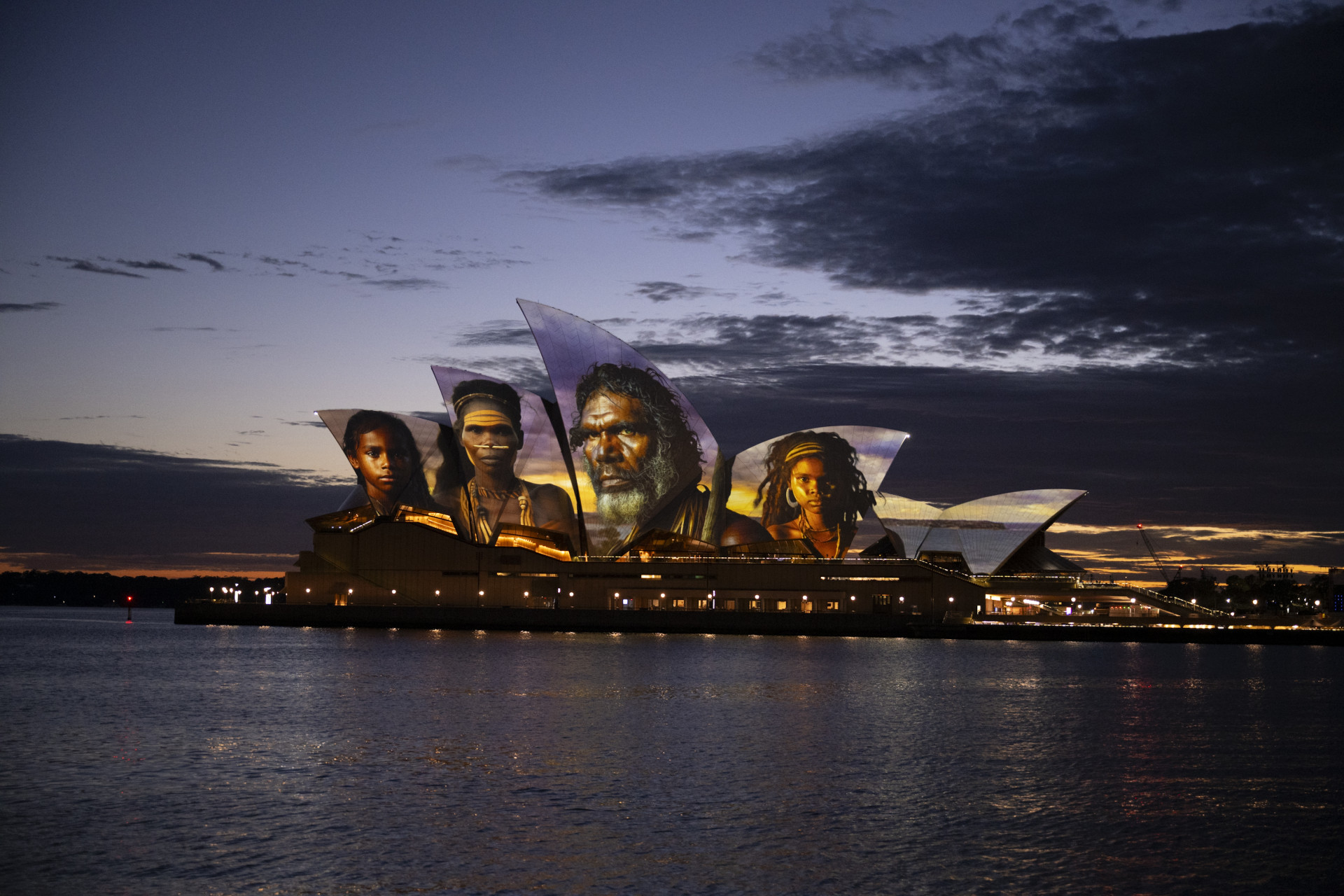
Titled ‘Trailblazers’, the 2024 Dawn Reflection featured powerful portraits of the four key First Nations figures who lived around Sydney Cove (Warrane) from the 18th century.
Nanbarry was a prominent figure in Sydney’s early colonial history, serving as an interpreter and intermediary between his people and the British.
Barangaroo played a significant diplomatic role in mediating between the local Gadigal clans and the European settlers, who were unaware of the traditional practices of the original custodians.
Pemulwuy was a prominent First Nations warrior. He was a proud member of the Bidjigal people, a clan of the Eora Nation. However, his role was not just that of a warrior - Pemulwuy, much like Barangaroo, began in a diplomatic role with the new arrivals, arranging trade through meat and fish.
Patyegarang is an important figure in Aboriginal and Torres Strait Islander history and is considered by some to be the first Aboriginal linguist in Australia.
The artwork was created by Aboriginal digital artist Brett Leavy (a proud Kooma man) and developed using digital tools that build on historical images, paintings, sculptures and references, to create lifelike and respectful 3D virtual portraits. Each cultural figure was chosen by the Metropolitan Local Aboriginal Land Council and Mr Leavy took on the responsibility of rendering their images based on historical material.



2023: 'Diyan Warrane' by Rhonda Sampson
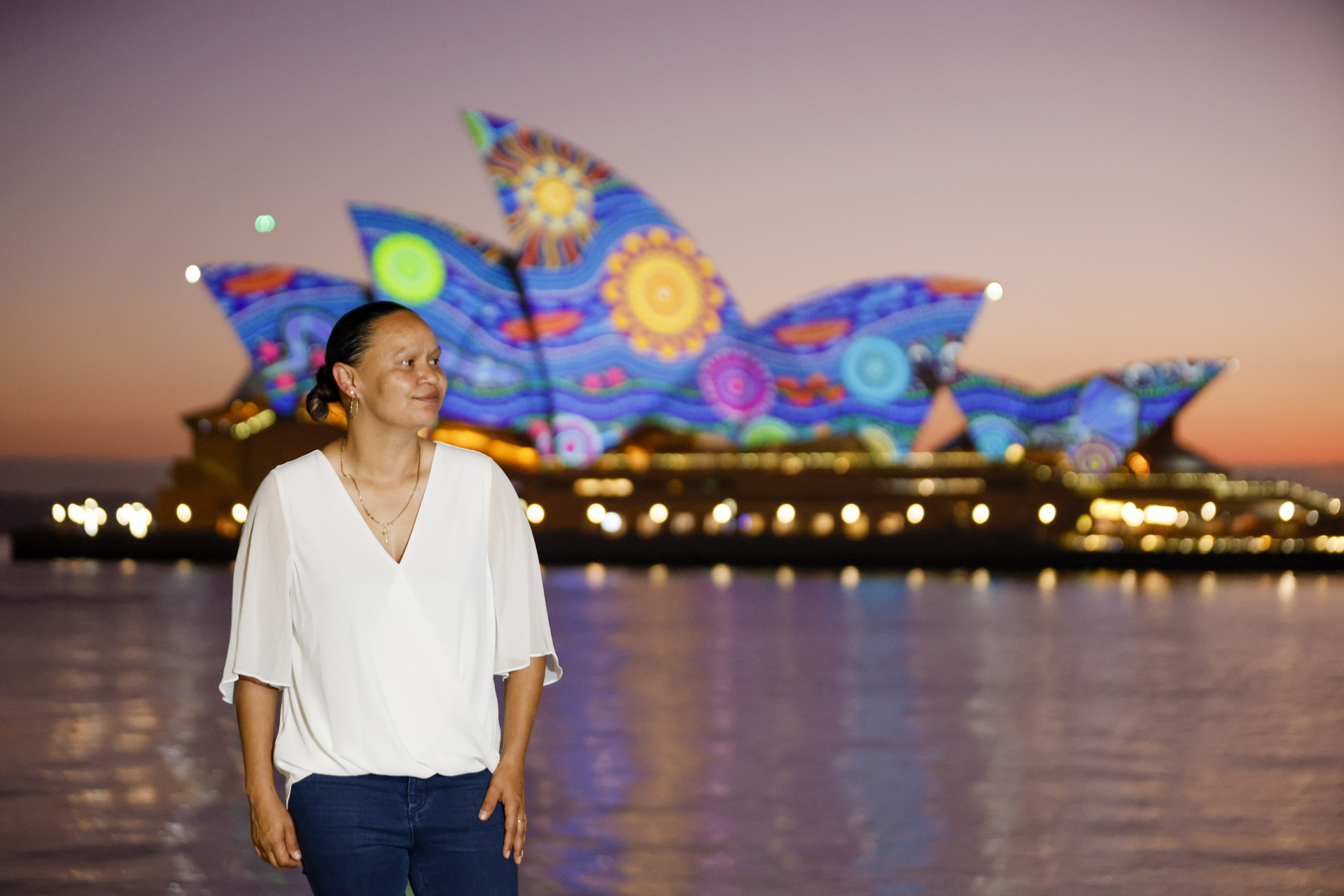
Proud Kamilaroi woman and artist Rhonda Sampson was commissioned to create Diyan Warrane for this year’s Dawn Reflection. Rhonda lives on Dharawal country in Western Sydney and joined us at dawn to see her work on the Opera House sails.
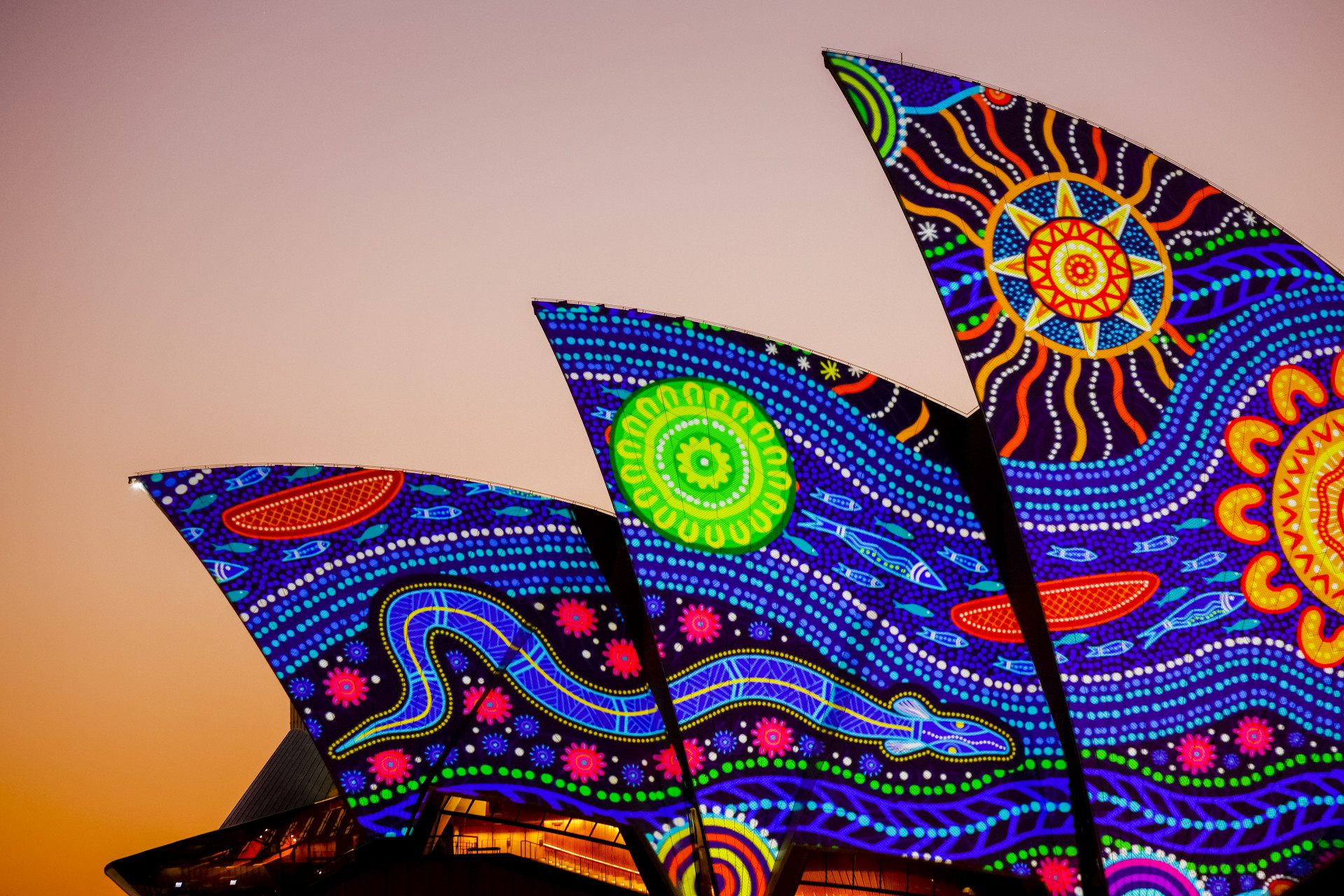
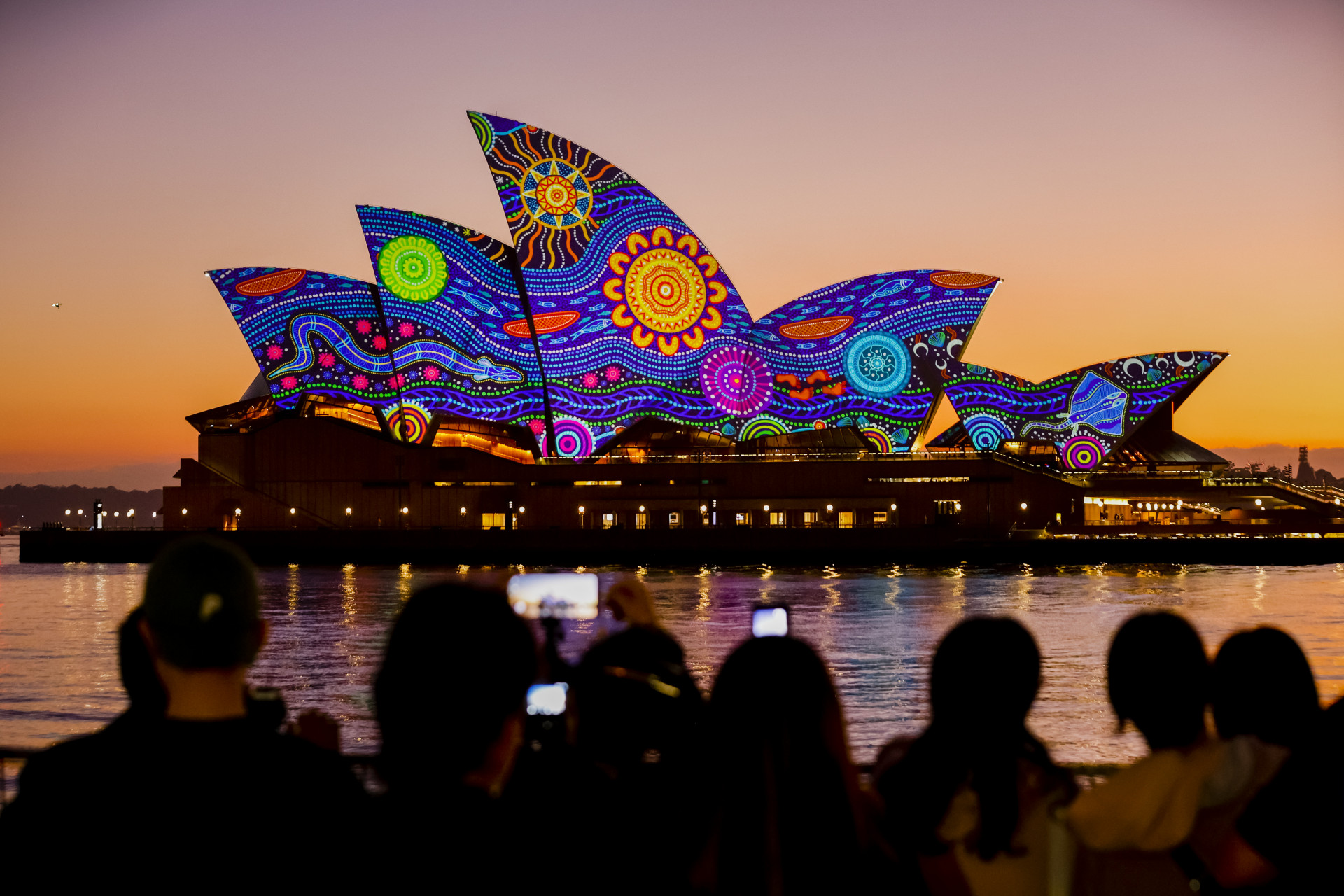
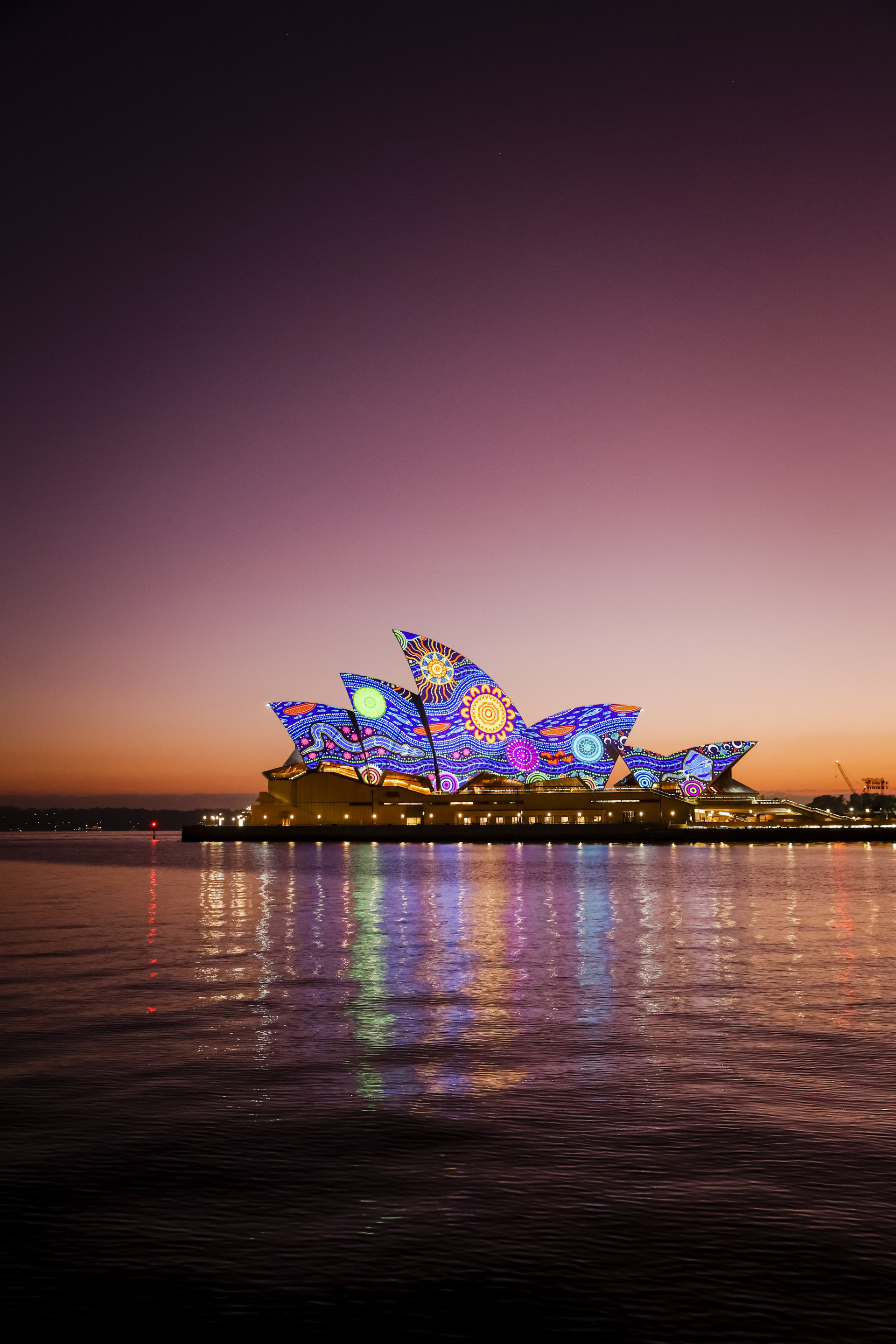
Diyan Warrane represents the important role of First Nations’ women around the waters of Warrane (Sydney Harbour). These waters became known as the ‘women’s domain’, where Gadigal women would fish throughout their harbour home, from Me-Mel (Goat Island) to Ta-ra (Dawes Point). The artwork honours four celebrated women of the Gadigal people, Boorong, Patygerang, Daringa, and Barangaroo, who were all very skilled fisherwomen with their own unique individual stories and contributions.
The harbour has always been integral to the everyday lives of the Gadigal people of the Eora Nation. It is important to me to share the Eel Dreaming Story of the Gadigal people of how the waterways of Warrane were formed, and how the Gadigal women used those waterways to fish and feed their people. They listened to the harbour, to Mother Earth – we all need to listen.
2022: 'Ngintaka Tjukurpa' by David Miller
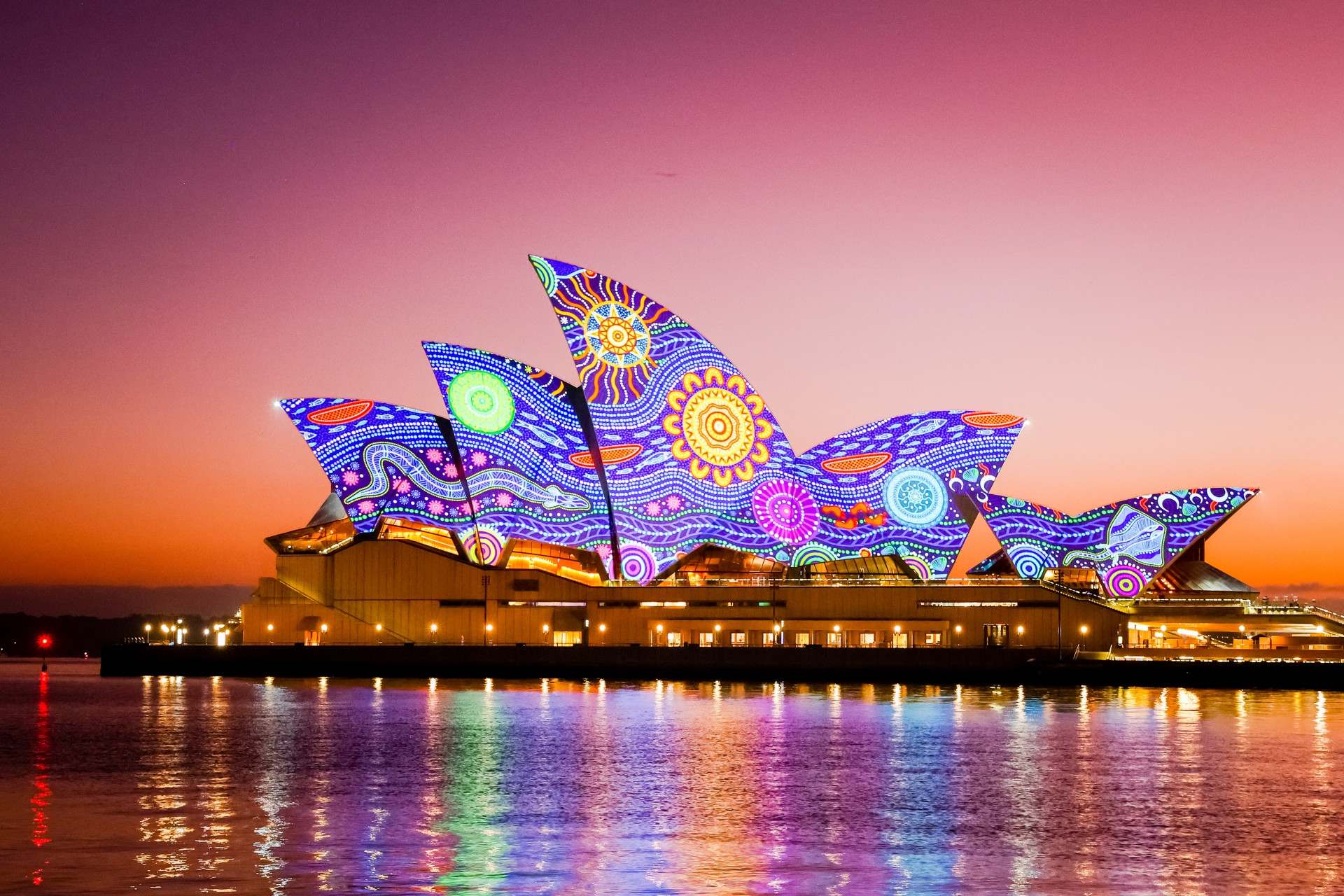
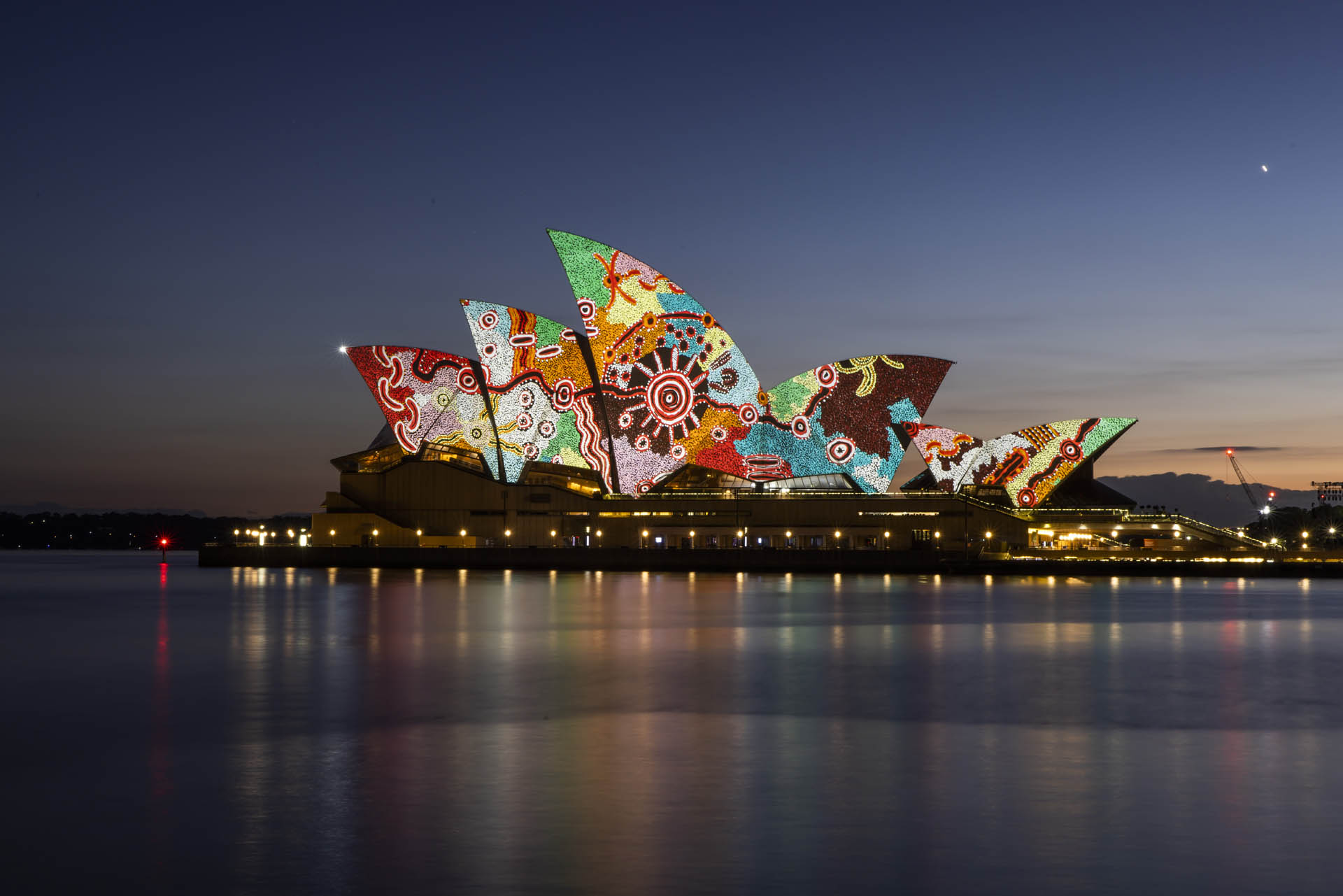
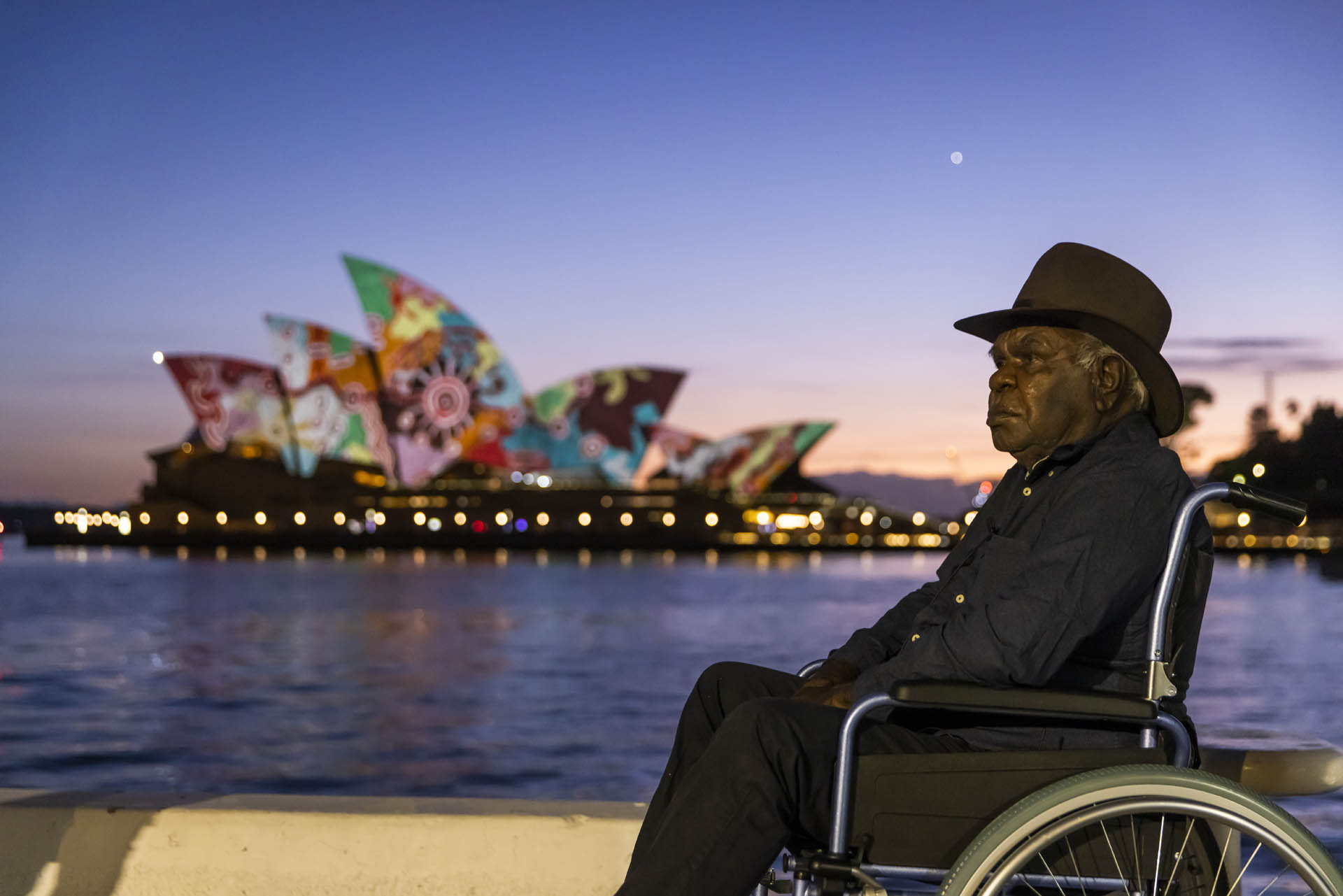
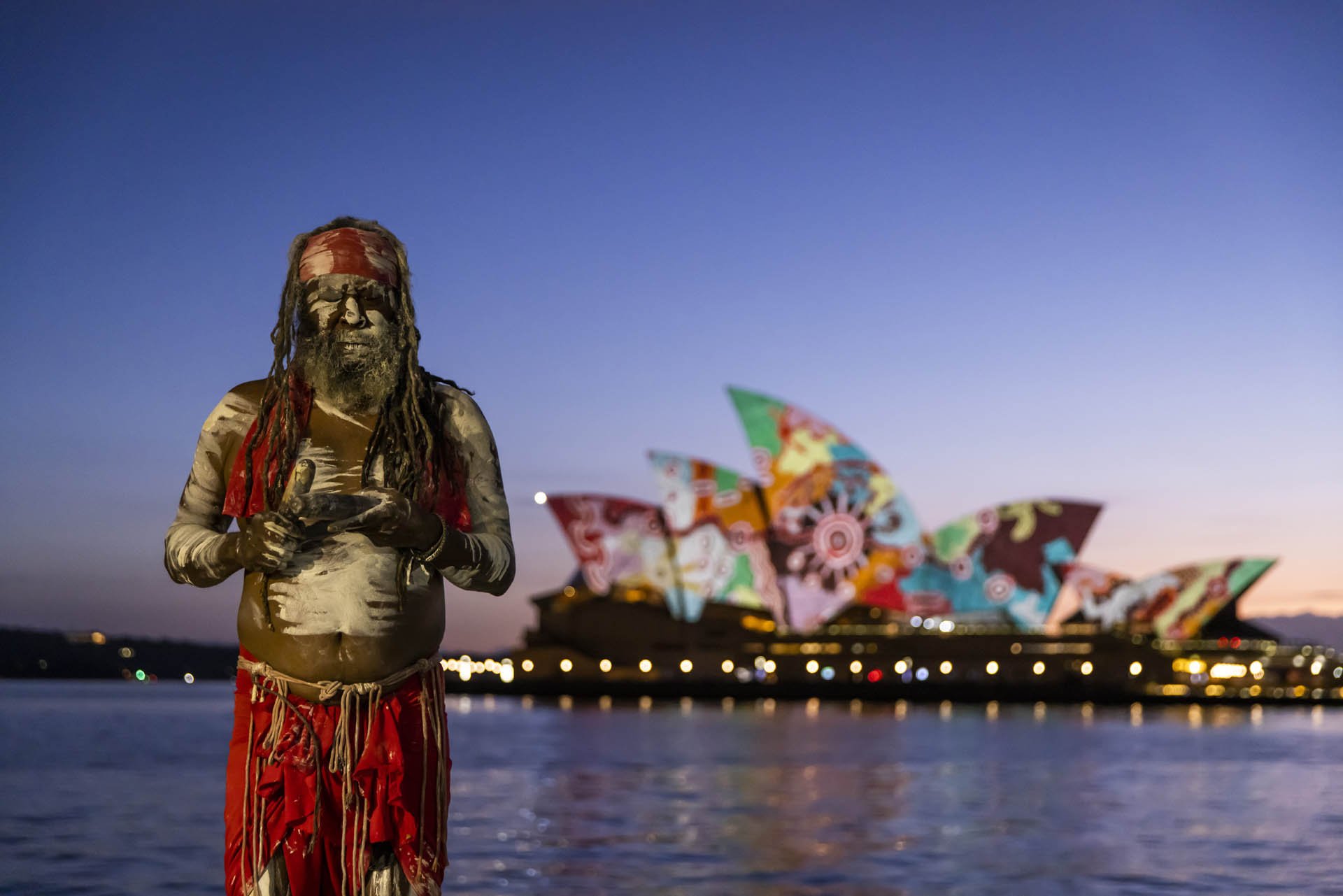
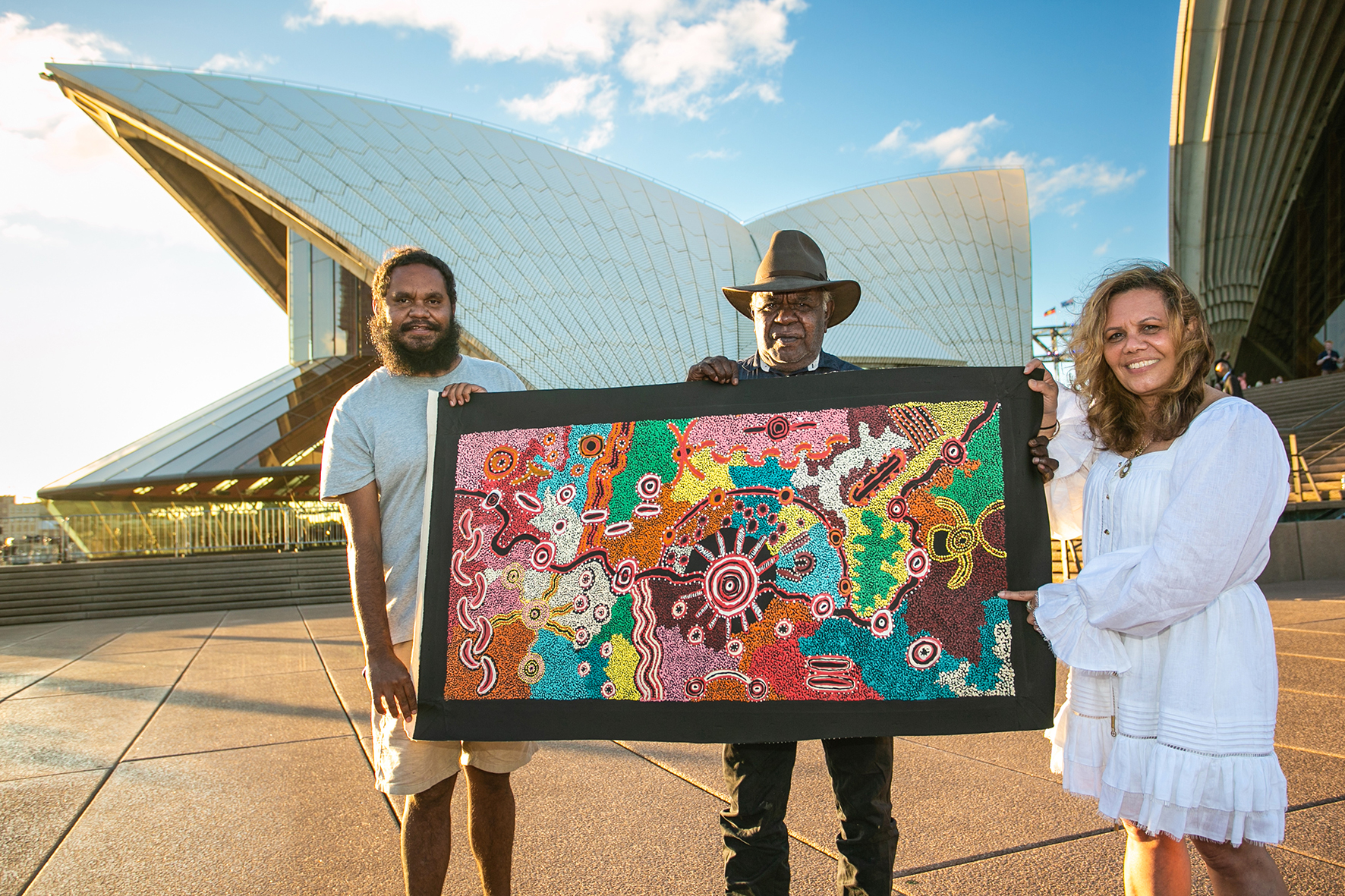
Dawn Reflection 2022 saw renowned Pitjantjara artist David Miller’s work Ngintaka Tjukurrpa (perentie lizard Dreaming) being projected onto the sails of the Sydney Opera House.
This particular Dreaming story is significant to the First Nations peoples of central Australia. The artwork tells the story of the Wati Ngintaka (perentie lizard man) stealing a special grindstone and discovering food and water holes as he sprawled across the desert areas, west of the Great Dividing Range. The Perentie lizard is the largest goanna native to Australia and the fourth largest monitor lizard on the planet, growing up to 2.5 metres in length.
“The painting tells the story of my father’s country. I’m really pleased my father’s Dreaming [was] displayed on the Opera House. I’m from the centre of the country and we have a different view from people living in the city. We feel Australia Day is about coming together, sharing our stories as Indigenous people and keeping our culture strong.” David Miller
2021: 'Angwirri' by Frances Belle Parker
When first approached to do this work, Frances said she felt conflicted as this day is often seen as a day of trauma for many First Nation Australians. Frances took the opportunity for all people to heal, to begin to talk, and to have the conversation about what the day means.
The colours are inspired by the vast array of colours present in the Australian landscape and coastline. The brown linear design symbolises a mapping of country/coastline.
The circle markings depict the 250+ Aboriginal Language groups present in Australia and the linear marks represent the 200 nationalities that call Australia home.
By creating this work, it gave Frances the opportunity to help tell a story that not only represents who we are as a nation but also to give people a wider understanding of Aboriginal Culture and how valuable it really is to our identity as a nation.
“Our sense of belonging to the land is something that is intrinsically embedded into our being, and as First Nations people we are responsible for sharing the truth of our history,” Frances Belle Parker, 2021.